Why Nintendo Took a Chance on Two Screens and a Stylus
Nintendo answered a hardware race with an unusual interface that developers could explain by touch.
 Narrated by Jonny 8-Bit6 min read · Published 8/20/2026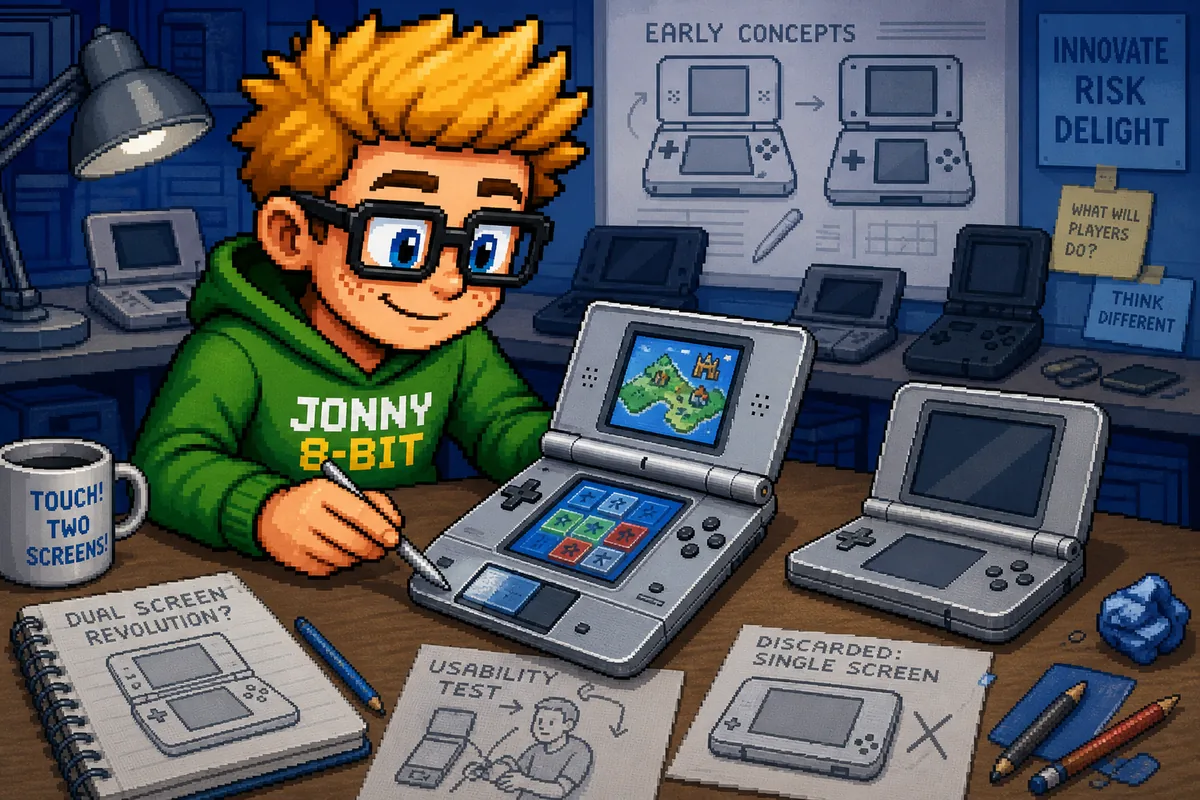
Announced as a “third pillar,” the DS did not merely increase Game Boy specifications. Its clamshell protected two displays, while the lower touch screen, stylus, microphone, and wireless connection offered inputs players had not expected from a mainstream handheld.
The story begins
Announced as a “third pillar,” the DS did not merely increase Game Boy specifications. Its clamshell protected two displays, while the lower touch screen, stylus, microphone, and wireless connection offered inputs players had not expected from a mainstream handheld.
Software teaches the hardware
PictoChat made drawing and local communication immediate. Nintendogs, Brain Age, Kirby: Canvas Curse, and games built around maps or menus showed that touch could reach people intimidated by conventional button combinations.
Risk becomes vocabulary
Two screens complicated design and were not ideal for every game. The DS succeeded because Nintendo backed the novelty with many distinct examples. Touch controls and secondary displays later spread through phones and hybrid devices, even as the exact dual-screen format remained distinctive.
Why this history still matters
Nintendo answered a hardware race with an unusual interface that developers could explain by touch. The details matter because game history is rarely a straight line from one famous inventor to one finished product. Hardware limits, business decisions, communities, and creative choices meet at every turning point. Reading the surviving evidence together shows what actually changed and keeps a memorable anecdote from replacing the fuller story.
Videos and further viewing
These videos add demonstrations, interviews, or visual context to the story. A privacy-enhanced YouTube player loads only after you choose a video. Review YouTube’s privacy policy.
The Story of the Nintendo DS (Complete Series)
Video by Double DogA full history of Nintendo’s unusual dual-screen handheld, its launch, hardware ideas, and long-term success.