EVO Moment 37 and the Parry Heard Around the World
With one strike of health left, Daigo Umehara predicted Justin Wong’s finishing move, parried every hit, and created fighting game history.
 Narrated by Jonny 8-Bit6 min read · Published 8/20/2026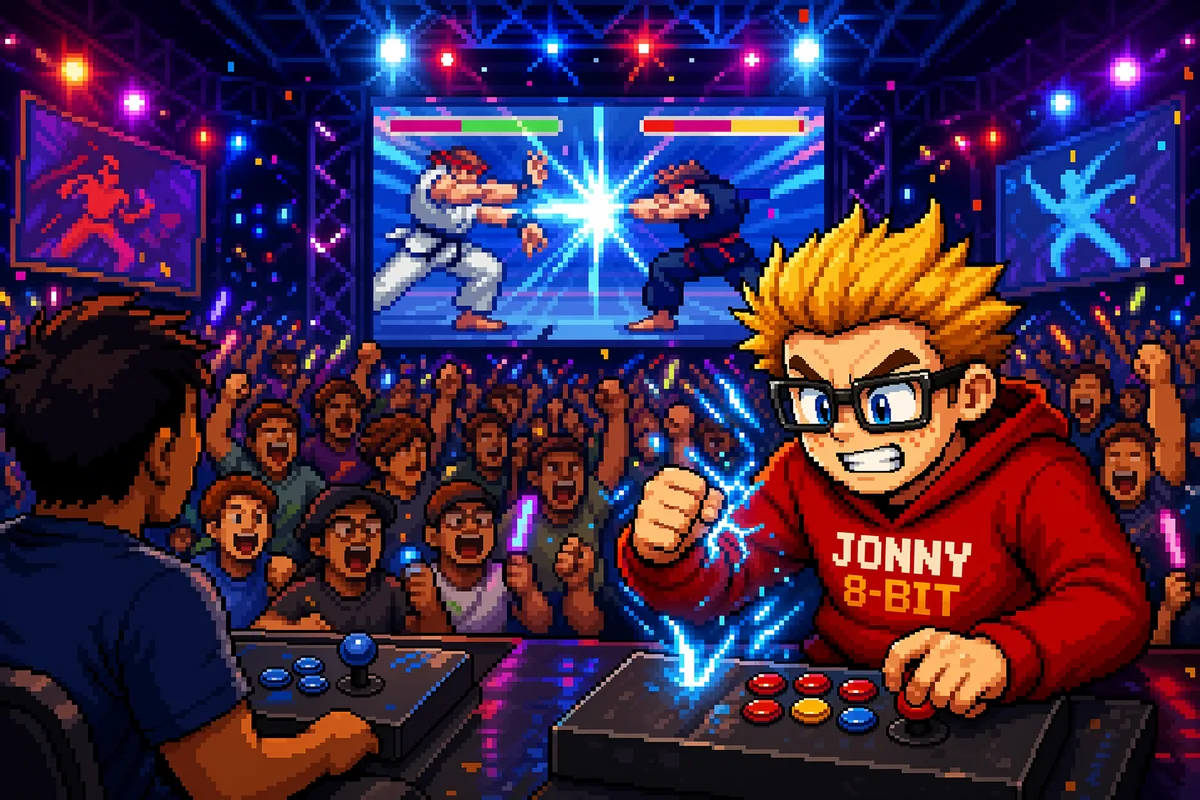
On August 1, 2004, two young champions sat at arcade controls inside Cal Poly Pomona. Daigo Umehara, a 23-year-old star from Japan, played Ken in Street Fighter III: 3rd Strike. Justin Wong, an 18-year-old champion from New York City, played Chun-Li. They had never met before, yet their first tournament match together would connect their names for the rest of their careers.
The match was deep in the Evolution Championship Series, better known as Evo. It was the first game of the losers’ bracket final, which meant the loser of the set would finish third. Wong had pushed Umehara’s health down to a tiny red mark. One ordinary hit would end the round. Even blocking the wrong attack would be fatal.
Then Wong activated Chun-Li’s rapid Super Art. Umehara moved toward it instead of away. He parried every strike, jumped into the last kick, and answered with a combo that defeated Chun-Li. The room exploded. A few seconds of play became “Evo Moment 37,” one of the most widely shared clips in competitive gaming history.
Two champions arrived from different scenes
Umehara and Wong were already serious competitors, but they came to the match with different reputations. Umehara was one of Japan’s strongest fighting game players. Wong was famous in the United States for Marvel vs. Capcom 2, a faster and more chaotic game than 3rd Strike. At Evo 2004, Wong won the Marvel vs. Capcom 2 tournament and placed highly in several other games.
Just before facing Umehara, Wong defeated Toru “Raoh” Hashimoto, a leading Japanese Chun-Li player. That left Wong as the final American in the 3rd Strike bracket. Another win would eliminate a second Japanese favorite; Umehara could stop a run by a player many still saw mainly as a Marvel specialist.
Wong’s Chun-Li controlled space with long, quick attacks and patient defense. Umehara’s Ken needed to find openings and move closer. Wong built a large lead while Umehara became more aggressive. By the end of the round, Ken had almost no health and Chun-Li had a full super meter. To most viewers, the result appeared settled.
Why blocking could not save Ken
In many fighting games, blocking is the safest answer to an incoming attack. It was not safe here. Special attacks in 3rd Strike can cause a small amount of “chip” damage through a normal block. Ken had so little health that blocking even part of Chun-Li’s Super Art II would knock him out.
The game offered another defense called a parry. For a high or middle attack, a player taps toward the opponent just before the strike lands. A successful parry avoids both the hit and chip damage and lets the defender act sooner than after a block. Press too early or too late, however, and the attack connects.
Chun-Li’s super did not deliver one easy strike. It rushed forward in a series of fast kicks with a small pause in the rhythm. Umehara needed 15 successful parries to survive the sequence. The opening came so quickly that he could not simply wait to see the super and then react. He had to predict when Wong would use it and enter the first parry in advance.
That prediction is visible in the seconds before the attack. Umehara keeps Ken at a distance and moves with Chun-Li rather than rushing in. Capcom’s later explanation, drawing on match commentator Seth Killian’s analysis, describes this movement as a deliberate setup. Wong had the life lead and the super meter; Umehara tried to make the tempting finishing move become Wong’s most likely choice.
The parry was only half of the comeback
When Chun-Li lunged forward, Ken flashed with each parry. The crowd understood the plan almost immediately and grew louder with every kick. Umehara could not pause to enjoy it. One missed input would still end the round.
For the last kick, he jumped and parried in the air. That choice mattered because it placed Ken in position to attack on the way down. Umehara landed a jumping kick, continued into a ground combination, and finished with Ken’s own Super Art. Chun-Li fell, and the audience’s rising noise turned into a roar.
Simply surviving was not enough; Umehara had to remove Chun-Li’s remaining health before Wong recovered. The jump and counterattack show why the play was more than a memorized rhythm exercise. He knew which defense could save him, how to turn the final parry into an opening, and which follow-up could win.
The comeback won the round and helped Umehara eliminate Wong from the tournament. It did not win him the championship. Kenji “KO” Obata defeated Umehara in the grand final, leaving Umehara in second place and Wong in third. Years later, the play most people remembered was not the tournament’s final point. It was the instant when a nearly certain loss became a victory.
Why it was called Moment 37
There were not 36 official Evo moments before the parry. According to ESPN, tournament organizer and ring announcer Ben Cureton was asked to create a highlight after Evo 2004. He chose a larger, random number because “Moment 37” suggested a whole collection of amazing tournament stories.
The title made the clip feel like one treasure from a larger archive. It also gave viewers a short name they could remember, search for, and share. “Watch Moment 37” was easier than explaining the players, game, bracket, and move.
The recording itself supplied everything a sports highlight needed. Viewers could see Ken’s empty health bar, hear the crowd understand the danger, watch the repeated flashes, and feel the release when the final combo landed. They did not need to know every rule of 3rd Strike. Umehara later explained that even people unfamiliar with fighting games could understand the excitement. Skill that normally looked invisible suddenly had a clear sound, rhythm, and result.
The clip became a gateway to competitive fighting games
Moment 37 spread online when game video was harder to record and distribute. Evo did not yet have today’s large stages and broadcast teams. ESPN reported that fewer than 500 people attended Evo 2004. Seth Killian was both commentating and recording, so the play came close to surviving only as a story told by people in the room.
Instead, the clip gave millions of viewers a doorway into the fighting game community. Wong said people regularly told him they became involved after watching it. Umehara said the moment helped make his professional career possible. Their rematches carried extra meaning because audiences remembered how the rivalry began.
The play also explained what expert fighting game players do. The deeper contest involves spacing, habits, resources, risk, and prediction. Umehara recognized his only path, encouraged Wong to choose the expected attack, performed the timing under pressure, and converted the opening into a win.
Competitive gaming existed long before 2004, from the first known Spacewar! tournament in 1972 to national arcade scoreboards and local fighting game gatherings. Moment 37 did something different: it compressed the reason people watch high-level play into a clip shorter than a minute. The stakes were visible, the skill was readable, and the crowd taught every new viewer exactly when to cheer.
Videos and further viewing
These videos add demonstrations, interviews, or visual context to the story. A privacy-enhanced YouTube player loads only after you choose a video. Review YouTube’s privacy policy.
Official Evo Moment #37, Daigo vs Justin Evo 2004 in HD
Video by Evo EventsWatch the official tournament footage of Daigo Umehara’s full parry and comeback against Justin Wong.
The esports Moment that Changed Fighting Games Forever
Video by IGN GamesA retrospective explaining why the recorded moment traveled far beyond the room where it happened.