IDDQD and IDKFA: How Doom Cheat Codes Entered Gaming Culture
Five typed letters could turn a punishing demon maze into a laboratory for exploration and experimentation.
 Narrated by Jonny 8-Bit6 min read · Published 8/20/2026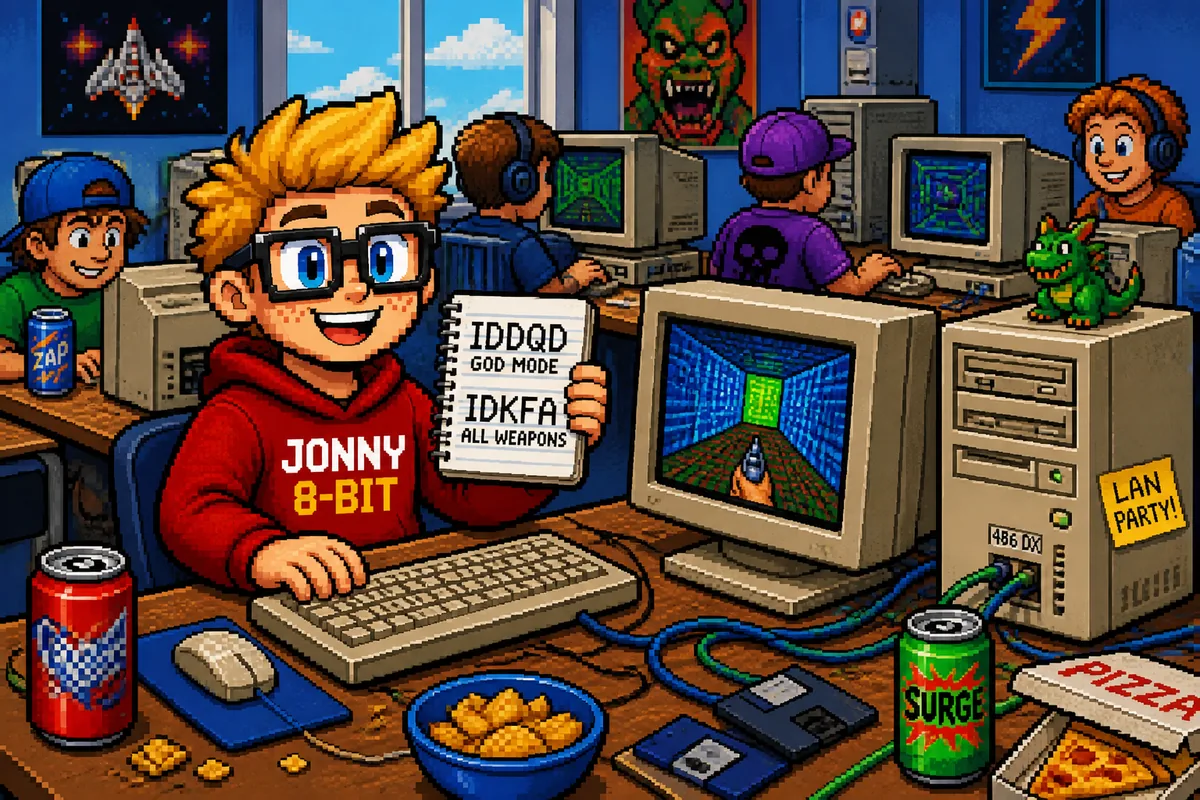
Picture a PC in 1993. Doom is filling the screen with growling demons, flashing gunfire, and corridors that all seem to lead toward danger. There is no cheat menu to open and no command box waiting for instructions. The player simply types five letters during the action: IDDQD.
A message appears, the marine’s health returns to 100 percent, and normal damage stops mattering. Type IDKFA and the inventory suddenly fills with weapons, ammunition, 200 percent armor, and every key. A difficult horror-action game has become a place to explore, test, and cause ridiculous amounts of trouble.
These codes began as development tools, but they did not stay behind the scenes. Players memorized them, traded them, and treated them like secret words. IDDQD and IDKFA became part of gaming culture because they were useful, strange, easy to share, and perfectly matched the unruly personality of Doom.
The game was always listening
Classic Doom did not require players to pause before entering a cheat. Its status-bar code watched ordinary keyboard presses during a single-player game and checked whether recent letters matched a stored sequence. That made the experience feel almost magical. Nothing on the screen asked for a password, yet the game recognized one.
IDDQD toggled what players commonly called “god mode.” Turning it on set the marine’s health to 100 and activated protection from ordinary damage. Entering the same code again switched the mode off. The message “Degreelessness Mode On” added another joke instead of plainly saying “invulnerable.”
IDKFA did something different. It provided every weapon, filled each ammunition type to its maximum, supplied all the keys, and gave the player 200 percent armor. It did not make the player immortal. Demons could still win if IDDQD was not active, but the player now had the equipment to answer almost any threat.
Dave Taylor needed a faster workbench
Programmer Dave Taylor joined id Software in Mesquite, Texas, late in Doom’s development. He had recently completed an electrical engineering degree and entered an office where a small team was racing toward the game’s December 10, 1993 release. Taylor helped with practical pieces that needed to work, including the status bar and cheat system.
The cheats solved a basic testing problem. A developer investigating a broken door or monster encounter near the end of a map should not have to survive the entire level every time. Invulnerability keeps a test alive. Full weapons and keys make it possible to check fights and locked areas immediately. Level-changing and wall-crossing codes shorten the trip even further.
Taylor later explained that repeated movement through the game made him nauseated, which gave him another reason to build quick routes to whatever needed testing. The important part is that he chose to leave these tools available to players. They were not accidental scraps discovered in unused code. They were development shortcuts deliberately allowed to become toys.
What the letters meant
The “ID” at the beginning identified id Software, but “DQD” came from a private joke. John Romero recalled that Taylor and friends had invented a fake college fraternity called Delta Q Delta. Romero described its nickname as “Delta Quit Delta,” referring to students dropping a class before a poor grade damaged their records. That personal reference became attached to one of the most famous invulnerability codes ever made.
IDKFA has collected several explanations over the years. The released source code gives the clearest evidence for how the program itself described it: a comment labels the KFA sequence “key full ammo.” The same section distinguishes IDFA, which grants firearms and ammunition but leaves out the keys. Whatever extra meanings players later attached to the letters, the code’s behavior is not mysterious.
The rest of the cheat list followed the same messy, memorable style. IDCLEV moved directly to a chosen level. IDMUS changed the music. IDSPISPOPD let the marine pass through walls in the original game, using an intentionally absurd phrase that was much harder to type but almost impossible to forget. The codes felt like jokes shared by the developers rather than polished menu options.
Shareware made the secret travel fast
Doom arrived at exactly the right moment for information to spread between old and new networks. Its first episode was distributed as shareware, allowing people to copy it and pass it along. The initial upload was so heavily requested that the University of Wisconsin-Madison’s FTP service struggled under the traffic. Large communities soon formed around the game on bulletin boards and online forums.
Cheat information traveled through those same channels. FAQ files could be downloaded, copied to another computer, printed, or repeated in conversation. Players also found codes in magazines, guidebooks, handwritten notes, and lists passed between friends. A five-letter sequence was ideal information for this world: small enough to remember, dramatic enough to demonstrate, and useful enough to share immediately.
This was gaming knowledge before every answer was one phone search away. Knowing IDDQD could make someone the expert in a classroom, dorm, office, or family. Watching a friend type it also taught the code faster than reading a long explanation. The player saw danger disappear and understood the result in seconds.
Cheats turned Doom into a sandbox
IDDQD changed the emotional experience of a level. Without it, a dark corridor could consume precious health and ammunition. With it, the same corridor became a place to study enemy behavior, search for hidden rooms, or examine how a trap worked. Fear gave way to curiosity.
IDKFA encouraged another kind of experiment. Players could compare weapons without waiting for the normal progression. What happens if the rocket launcher is used in a tiny room? How quickly can the plasma gun clear a crowd? Can a level designed around a shotgun survive the arrival of the BFG? The code made those questions easy to answer, often with loud and messy results.
That freedom also helped less experienced players see more of the game. Someone stuck on a difficult encounter could continue exploring instead of abandoning the adventure. The codes were not formal accessibility settings, but they let players adjust the experience for themselves. Like the earlier Konami Code, a testing shortcut became an unofficial way to choose how much resistance a game should provide.
Doom also drew a line around fair play
The original source code checks that the game is not a network match before processing its main cheats. That restriction matters because Doom was also famous for competitive “deathmatch” play. Secret invulnerability in a private campaign changes one person’s experience. Secret invulnerability against human opponents would destroy the agreement that makes competition meaningful.
This distinction helped shape how players talked about cheating. Using IDDQD to explore a single-player map was often treated as playful experimentation. Hiding an unfair advantage in multiplayer was treated as deception. The same word—cheating—could describe two very different acts.
The codes lasted because they represented the friendly side of that difference. They were visible, repeatable, and supplied by the game’s creators. Decades later, their letters still appear in usernames, project names, jokes, music, and references to “god mode.” Many games now expose console commands, creative modes, difficulty controls, and optional modifiers more openly, but Doom proved how much fun players could have when the rules became adjustable.
Videos and further viewing
These videos add demonstrations, interviews, or visual context to the story. A privacy-enhanced YouTube player loads only after you choose a video. Review YouTube’s privacy policy.
#33 Hidden Code | DOS – The Secret Behind DOOM’s Cheat Codes #retrogaming
Video by Retro RevealA quick demonstration of Doom’s famous typed cheat codes and the powers they activate.